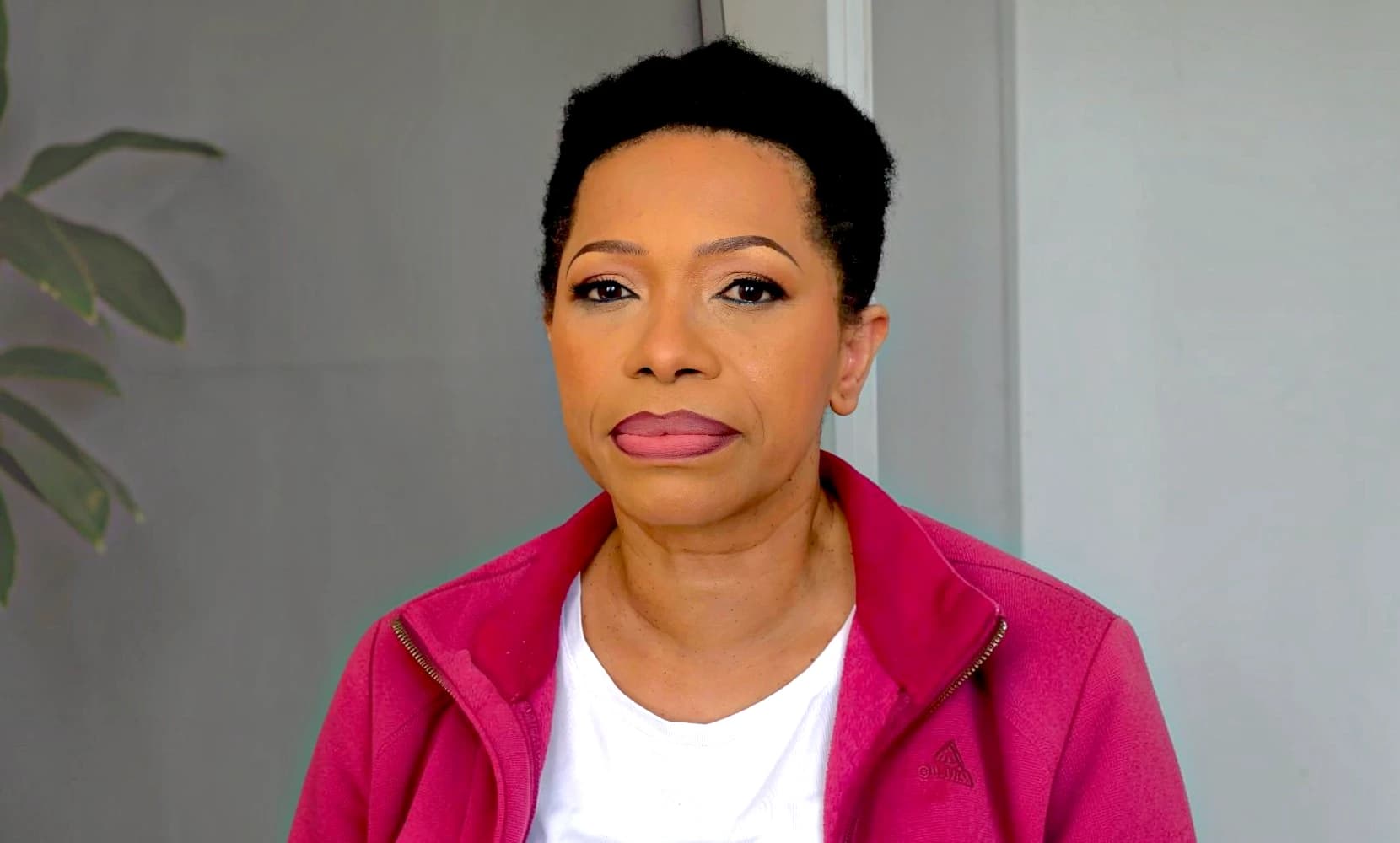
A bride who says she wants very simple makeup is often describing what she fears, not what she wants: her reactions to pictures regularly contradict her words, and those reactions are what you should follow. She also needs to be able to picture herself, which is why the inspiration should show women with her skin tone. Not because a reference on fair skin can't be adapted, it always can, but because it's hard to read your own desire on a face that doesn't look like yours.
This bride came to her trial without a single photo. She didn't know what she wanted, and she told me so honestly. Very reserved, hesitant, closed off at first. Like a little turtle pulling back into its shell.
What she did know was what she didn't want: something very natural, no product you could feel on the skin, and definitely not heavily done eyes.
By the end of the trial, she left with eyes worked in warm colors and a smoky eyeliner.
What she said, and what she looked at
To put pictures to her words, I brought out my inspiration and we scrolled through it together. Not to make her pick a model. To watch her react.
And every time, she stopped on the same things: soft looks, yes, but with real work on the eyes. That surprised me. Out loud, she kept telling me she preferred something simple. In front of the pictures, she loved exactly the opposite.
It's a gap I see often. When a bride says "simple" or "subtle", she isn't always describing a look. She's describing a fear: walking out of her home with a face that's no longer hers. The pictures clear up the misunderstanding in a few minutes, because we stop talking and start showing.
I show pictures on skin like hers
The women in the inspiration I scroll through have the same skin color as my bride. But not for the reason you might think.
A reference taken on fair skin is never unusable. We keep the look and adapt the shades to the person's skin tone. That's my job, and I do it every time.
The difficulty lies elsewhere, in projection. Facing a face that doesn't look like hers, a bride struggles to separate what she likes about the makeup from what she likes about the woman wearing it. Her reaction gets blurred. And her reaction is precisely what I'm trying to read.
With her own skin tone in front of her, that blur disappears. She's no longer looking at a pretty picture in the abstract. She sees herself.
The picture is there to read desire, not to be copied
Once the direction was clear, I didn't reproduce the photos. I adapted them to her face.
She naturally has slightly hooded eyelids. So I worked a smoky effect with the eyeliner, pulled outward, to open up the eyes without it reading as a trick. I chose warm colors, and added a light beige shadow to bring light to the front of the eye.
The result looks like what she loved. It's a copy of none of them.
The moment she could say no
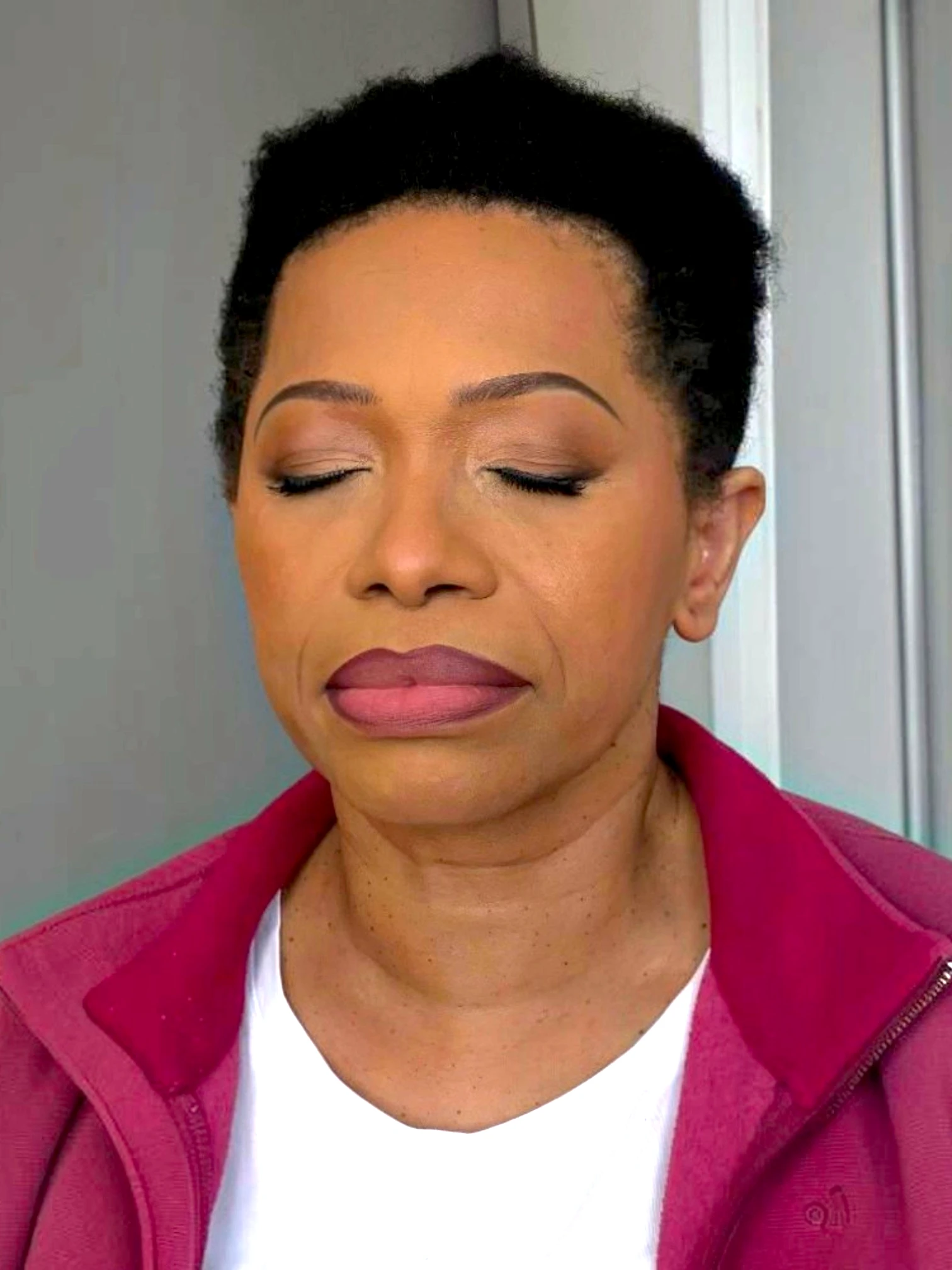
She had beautiful, very well-defined lips, with a naturally strong outline in a dark brown. And she absolutely didn't want them in the spotlight. Her choice was clear: eyes first, lips in the background.
I first suggested what I had in mind for the wedding day, telling her we would adjust together at every step. A dark pink liner with a slight violet tint, pink on the inside. She immediately felt it was too much for her. Too defined, too present.
So we removed that liner completely. Instead: a warm brown liner, but very light, with a matte gloss. A light pink in the center only. Then I tapped a little concealer in the middle of the lips to break up the pink and bring it toward a subtle peach, and a gloss to tie it all together. She loved that combo.
She couldn't have asked me for that at the start. She could turn it down once she saw it on herself. That's exactly what a trial is for: it turns a vague wish into a precise idea.
If you arrive knowing exactly what you want
It happens, and it's easy for everyone. We start from your idea. I still dig deeper, step by step, to check that the words you use really cover what you have in mind. In my experience, there are always small things to change or add along the way.
And then there are the brides who give me carte blanche. There, the work is the same: finding what looks like them, without them having to name it.
What to keep in mind before your trial
A trial isn't only for approving a look. It's there for you to voice your doubts, to say what scares you, to tell me what went wrong the last time someone did your makeup and, just as much, what you loved. None of that is small talk. It's information I need.
Bridal makeup is never done on you, it's done with you. You bring what you know about your face and your story, I bring the technique and the suggestions, and the wedding day look comes out of that collaboration. It's teamwork.
This bride arrived closed off and left out of her shell. In between, there were only pictures looked at together, steps explained one by one, and the right to say no to each of them.
Want a trial where we figure it out together, without knowing in advance?
Discover