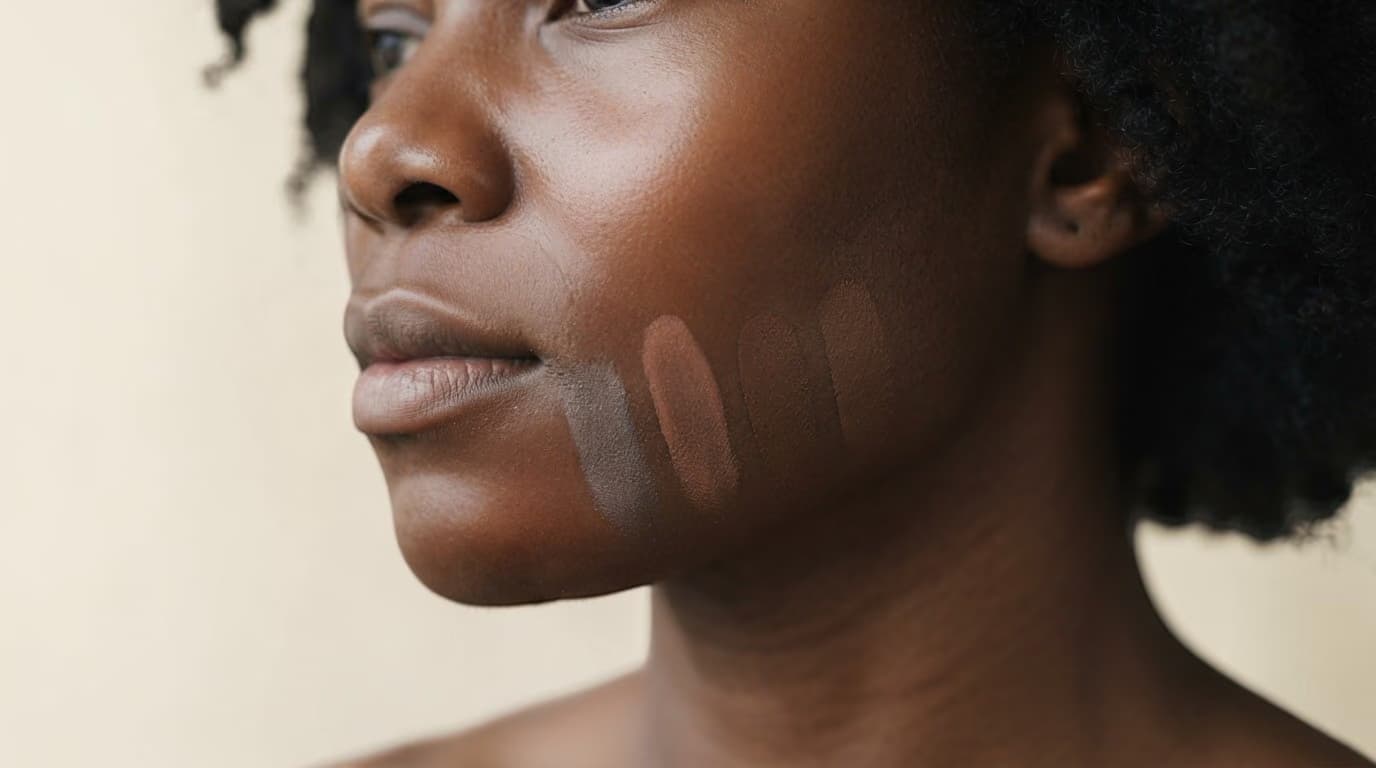
On Black or mixed-race skin, a foundation that turns gray and a foundation that turns orange are two opposite mistakes: gray comes from a shade lighter than the skin, orange from a shade that's too red. So the right answer isn't to compensate with a warmer foundation, but to stay with a neutral shade and bring the warmth on top, with bronzer and blush.
Two clients can tell me the exact same sentence, "my foundation doesn't work", and have two strictly opposite problems. One has a base that turns gray. The other has a base that turns orange.
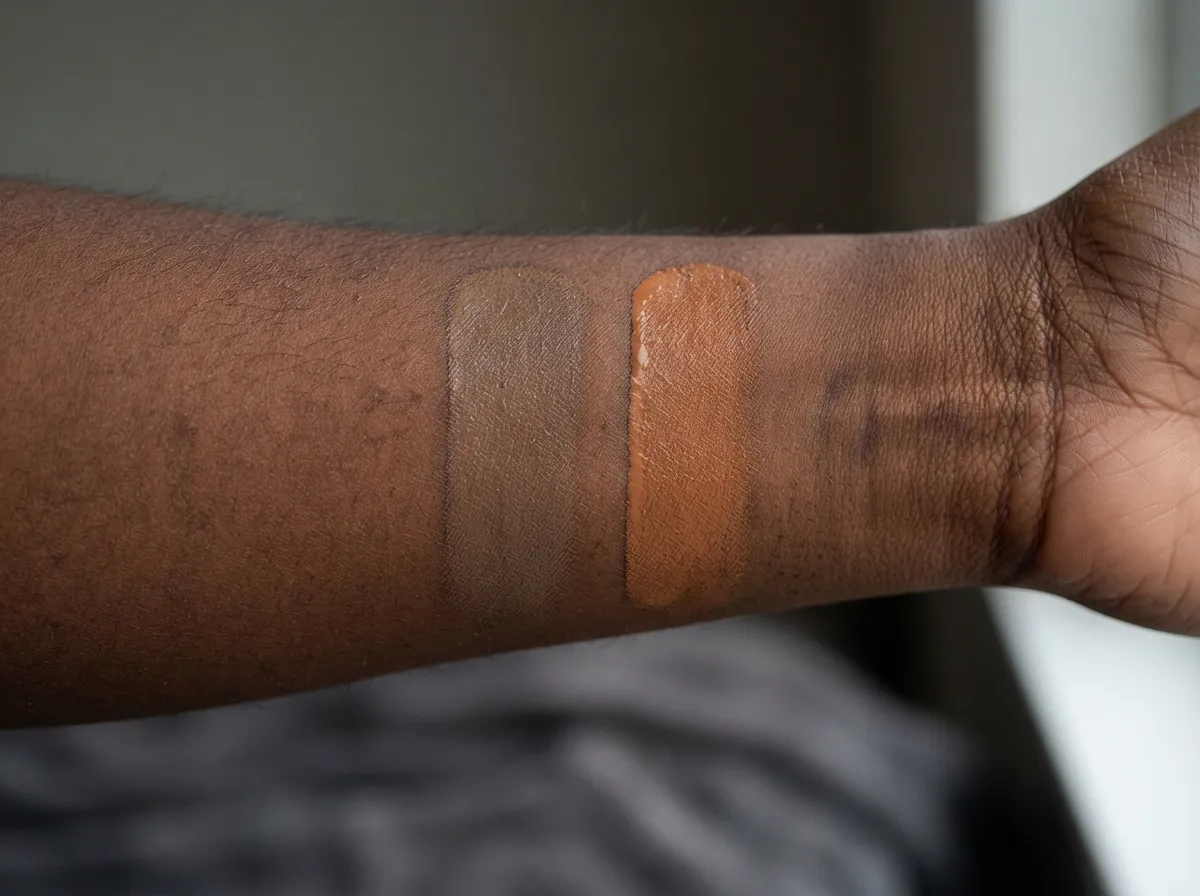
A base that turns gray is a foundation lighter than your skin. It doesn't blend in, it lays a pale veil on top, and the whole face takes on that ashy look you recognize instantly on deep skin. A base that turns orange is a foundation that's too red. The shade isn't necessarily too light, it's leaning the wrong way.
The reflex that takes you from gray to orange
When a base looks dull, the first reflex is to look for a warmer foundation. It's logical on paper, and it's exactly how you trade one problem for the other.
My advice goes the other way: stick with neutral foundations. A neutral foundation respects your skin. It does its job, which is to even out, not to recolor.
The warmth comes afterwards, with bronzer and blush. The advantage is decisive: you choose the amount and you choose the placement. The cheekbones, the top of the forehead, the bridge of the nose, where light falls naturally. A foundation that's too warm colors the whole face in one block, and nothing on top can fix it.
Cheekbone and jawline, a zone of light and a zone of shadow
I always test a shade in two places: on the cheekbone, and just above the jawline.
These aren't two random spots. Above the cheekbone, there's light. At the jawline, there's shadow. A shade can be spot-on in one of those zones and give itself away in the other. Looking at both shows how it really behaves.
Add a simple rule in store: step outside before you buy. The light in the aisles is artificial, directional, sometimes very yellow. It gives a false reading of your skin. Put the tester on your face and go look at yourself outside, in natural light. That's the light people will see you in all day.
What if the shade was right in the morning?
That's a whole other problem, and it's worth telling them apart. If your base was right when you left home and it darkened by the end of the day, it's not a buying mistake.
People say foundation "oxidizes", as if it were rusting on the skin. That's not what happens. The pigments that color it are stable mineral powders. Cosmetic pigment manufacturers have put them through a spectrometer before and after the shift: they come out identical. No color has changed.
What has changed is the light. Take a light T-shirt and put a drop of water on it. The spot looks darker, even though the fabric obviously hasn't changed color. The water has filled the gaps in the fabric, light bounces back less, and the eye reads it as darker. Let it dry, and the color comes back.
Your foundation does exactly the same thing, with sebum instead of water. Over the hours, your skin produces oil, it seeps between the pigments, less light is reflected, and the base looks darker. That's why it's more pronounced on oily skin, and much more visible in the evening than in the morning.
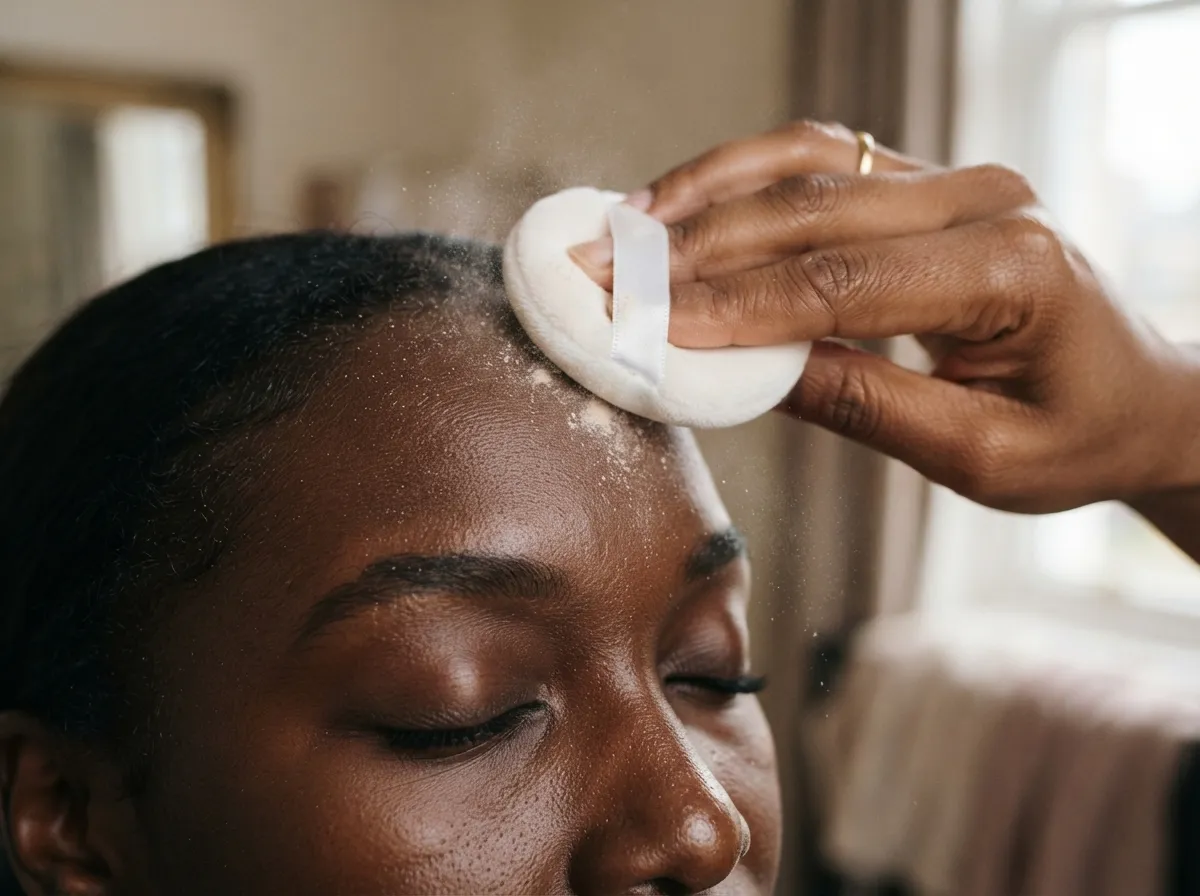
The consequence is concrete: looking for an "anti-oxidation" foundation makes no sense, there's no oxidation to prevent. What matters is controlling sebum. The right primer, a well-applied powder, and your base stays the one you chose in the morning.
A well-chosen foundation goes unnoticed. That's exactly how you recognize it.
Want to learn how to choose your own shade?
Discover